Docuvera — Loss360
Multi-tenant SaaS that turns insurance loss-run PDFs and scans into structured claims data. A custom OCR engine feeds domain-tuned LLMs, with schema-per-tenant isolation in PostgreSQL so no client's data can leak into another's.
Currently building document and voice AI for enterprise teams
Principal AI Engineer & Solution Architect
Six years of it. Mostly speech AI
I take AI systems from the first rough prototype to the version that survives real traffic, real documents and real users. Everything I learn on the way ends up here, written down properly.
Selected work
Thirteen projects live in the archive. These three are the ones that taught me the most about shipping AI that other people depend on.
Multi-tenant SaaS that turns insurance loss-run PDFs and scans into structured claims data. A custom OCR engine feeds domain-tuned LLMs, with schema-per-tenant isolation in PostgreSQL so no client's data can leak into another's.
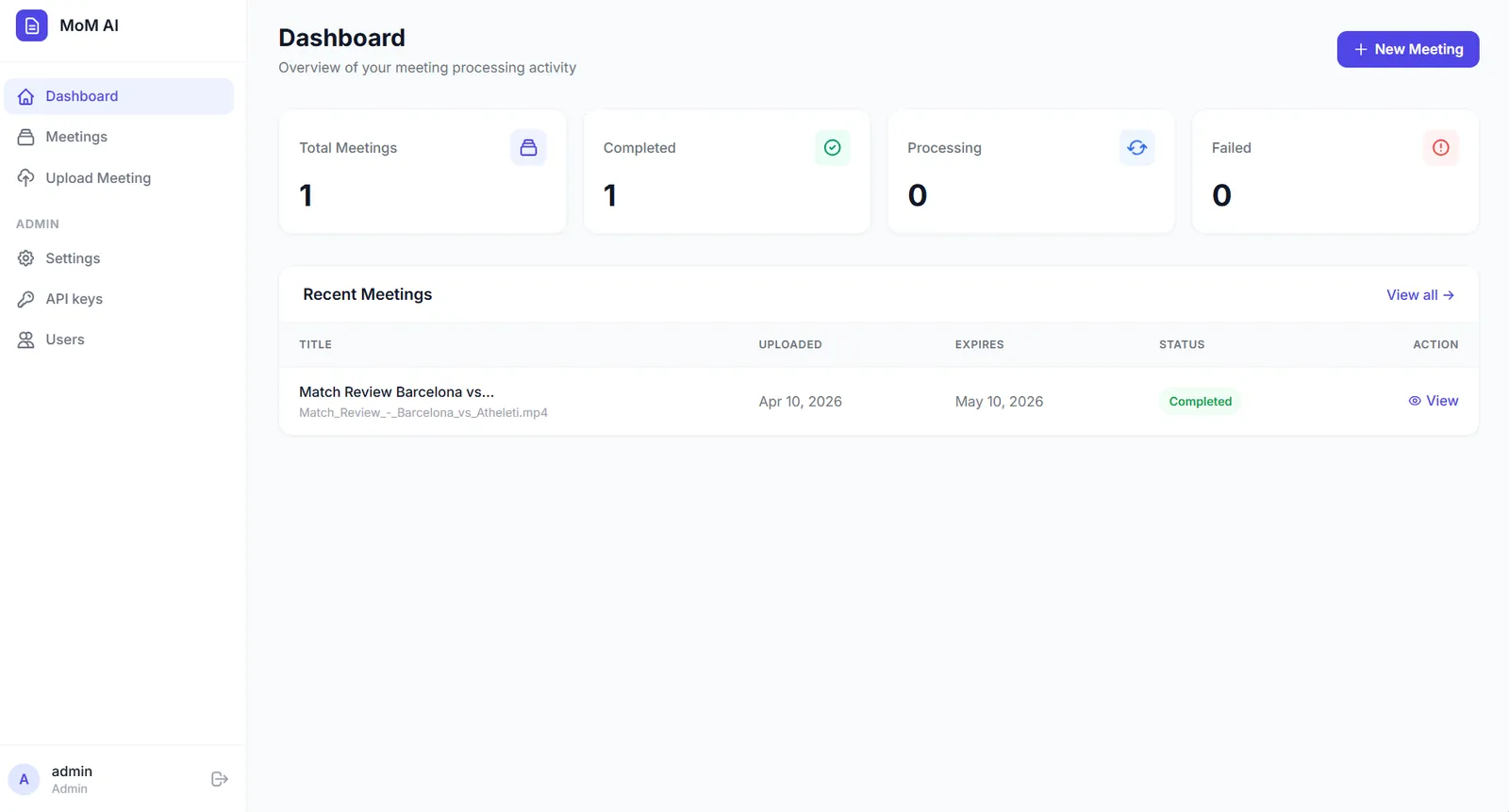
Drop in a recording, get back minutes. FFmpeg normalizes the audio, a Celery worker routes it to one of four speech-to-text providers, and an LLM returns the summary, the decisions and the action items. Both providers swap at runtime.
Semantic search over your own documents. PDFs, DOCX and text files are chunked with overlap, embedded with DistilBERT and indexed in FAISS. Chunk size, overlap, model and top-k are all knobs, because retrieval quality is an empirical question.
The short version
The hard part is everything around them: the queue that retries, the tenant boundary that holds, the GPU bill that doesn't spiral, the transcript a human can actually correct. That's the work I've spent six years getting good at — speech intelligence, document processing and LLM automation, mostly for enterprise teams who need it to hold up on a Monday morning.